
This case study explores how US consumers think about the Ray-Ban Meta Smart Glasses, amid recent updates and intensifying privacy debates surrounding smart eyewear technology.
In October 2023, Ray-Ban and Meta introduced their collaborative Smart Glasses. These glasses allow users to capture photos and videos, listen to music, make calls, and even livestream directly to Facebook and Instagram - all hands-free, without reaching for their phones.
Since their release, Ray-Ban Meta Smart Glasses have elicited mixed reactions: while some appreciate the innovation, others worry about privacy and potential data exploitation.
🚨BREAKING: Meta’s launches Ray-Ban smart glasses that can take calls, play music and livestream from your face for $299
— Genevieve Roch-Decter, CFA (@GRDecter) September 27, 2023
ALSO, BREAKING: I don’t want to send personal data about my face to Meta. pic.twitter.com/mRhAWMftHo
Culminating ongoing privacy concerns, Harvard students recently demonstrated rapid doxing of individuals using smart glasses integrated with facial recognition software, intensifying debates about the ethical implications of such technology:
Are we ready for a world where our data is exposed at a glance? @CaineArdayfio and I offer an answer to protect yourself here:https://t.co/LhxModhDpk pic.twitter.com/Oo35TxBNtD
— AnhPhu Nguyen (@AnhPhuNguyen1) September 30, 2024
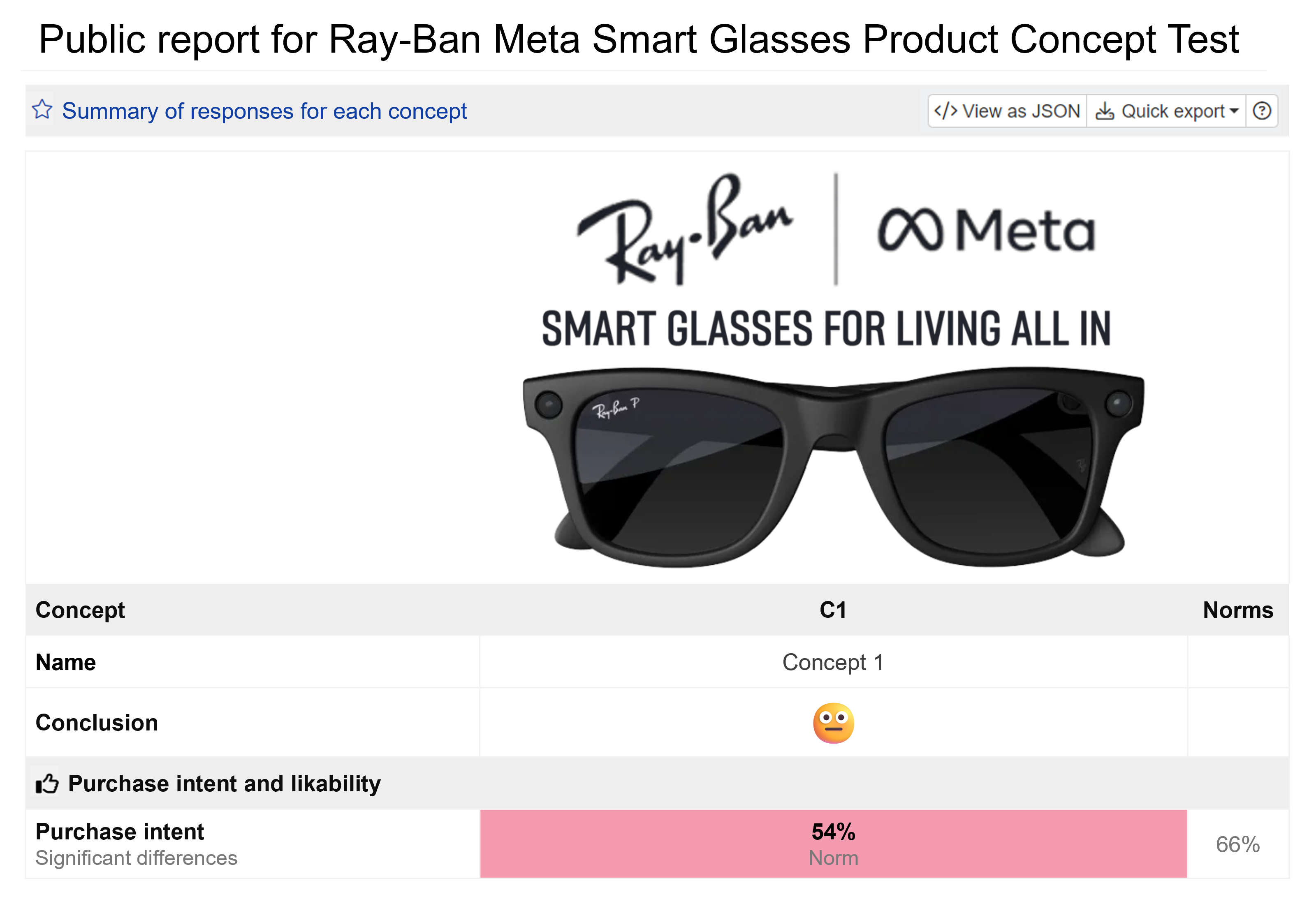
To investigate whether consumers embrace or are wary of this technology, we conducted a concept test, evaluating Ray-Ban Meta Smart Glasses among 100 US consumers. Note that the target market for this product is probably more specific (i.e. younger tech-savvy people).
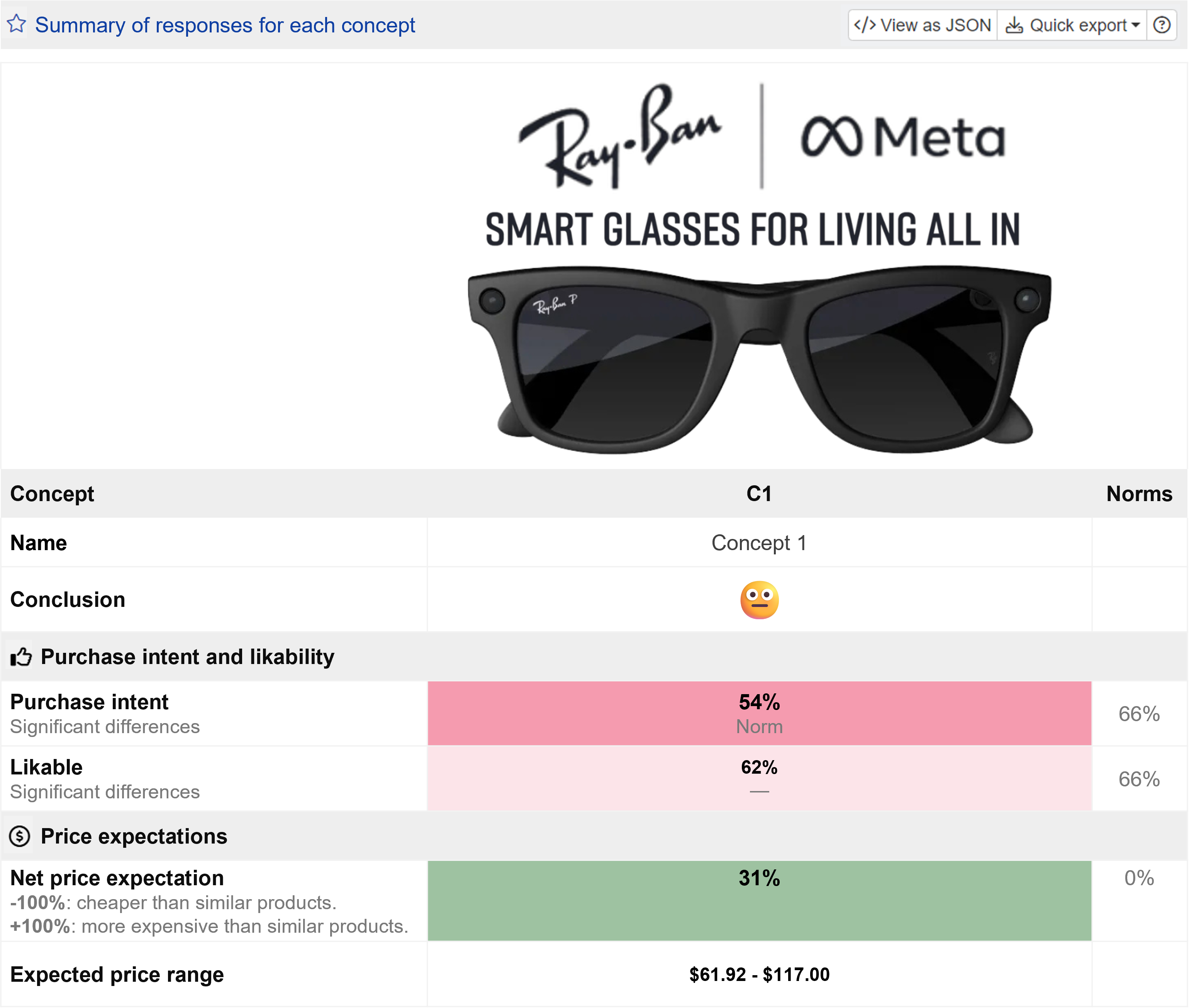
The results reveal a neutral overall sentiment towards the Ray-Ban Meta Smart Glasses. 62% of respondents rated the product favorably while 54% said they might buy the product if priced reasonably.
Interestingly, participants generally perceive these glasses to be pricier than similar products, expecting them to be in a range of $61.92 to $117. However, the actual price starts at $299 in the US, much higher than anticipated.
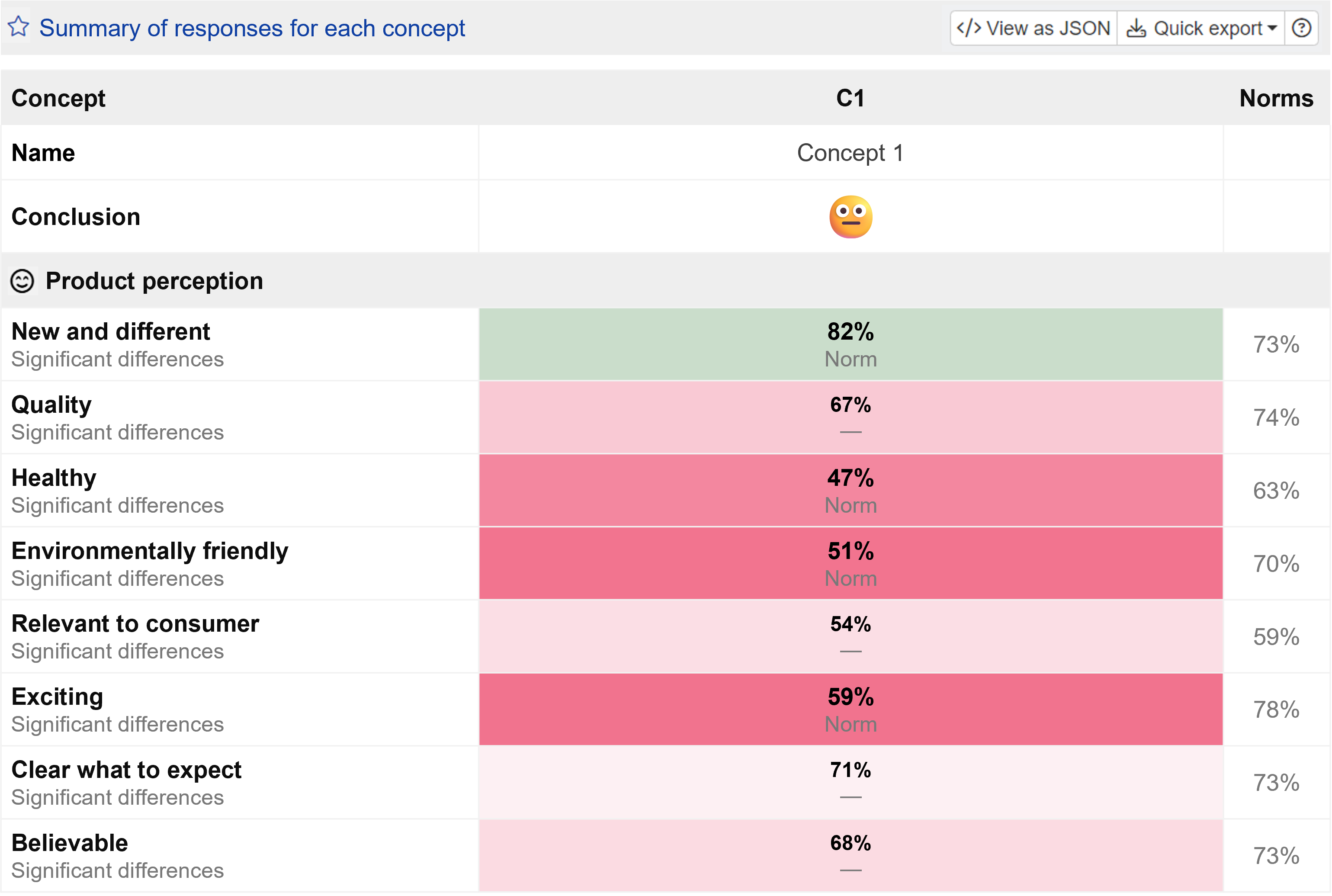
In terms of product perceptions, the smart glasses excel in perceived innovation, with 82% of respondents viewing them as new and different. However, only 54% find them relevant, 59% consider them exciting, and 68% of respondents perceive them as believable. These suggest there’s room for improvement in convincing the general population of its value in their daily lives.
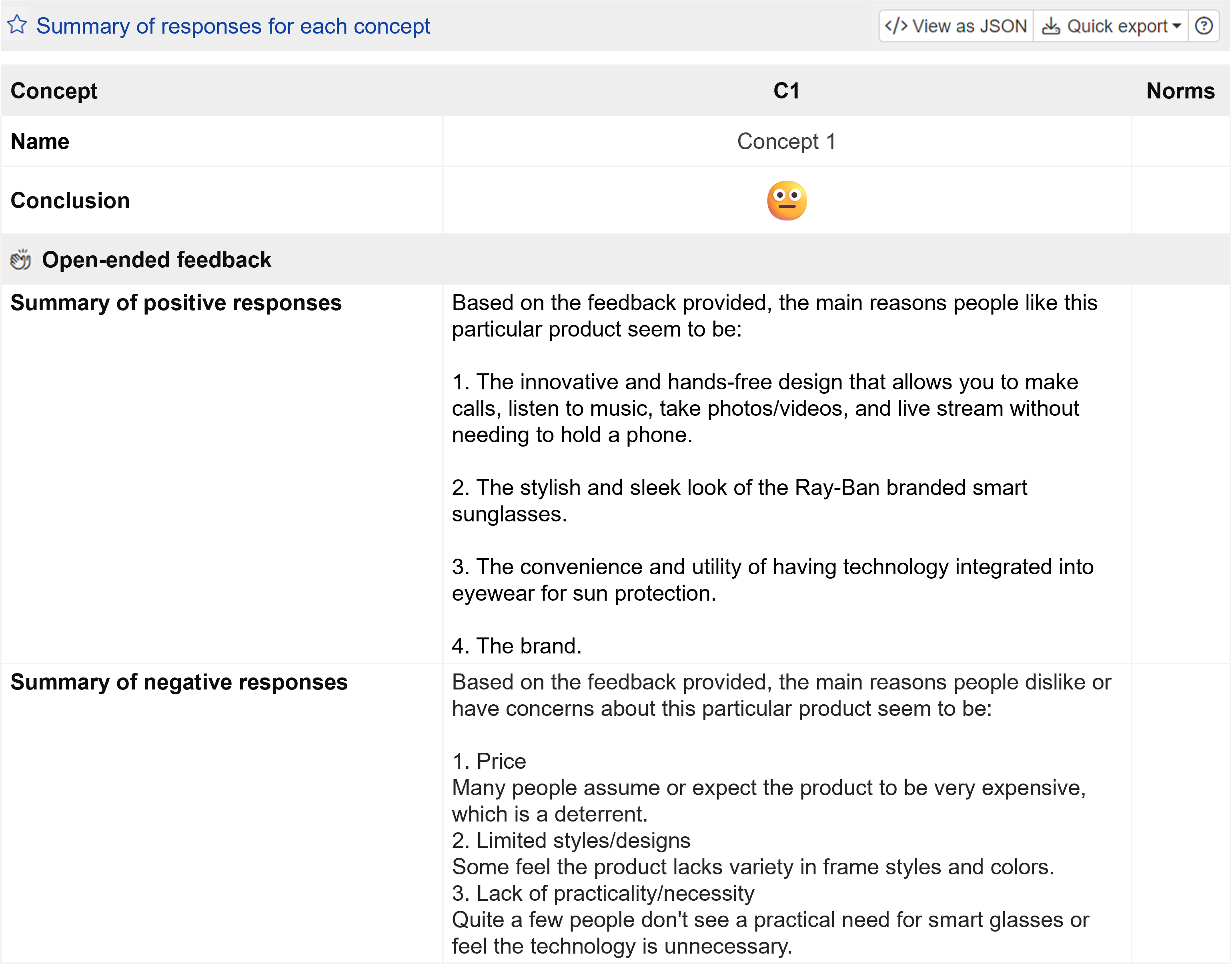
Based on the AI summaries of respondents’ open-ended responses, respondents appreciate the innovative hands-free design and stylish look, but express concerns about pricing, limited style options, and perceived lack of necessity in daily life. Notably, security and privacy concerns were rarely mentioned by respondents.
Want to see how your product concept performs? Launch your own test now!