

Americans are using AI, but they still don’t trust it
Adoption of AI is rising, but the fear factor is not budging. Latest results from Conjointly's AI Adoption and Opinion Tracker reveal Americans remain wary of the AI tools they use every day.
View article
2025 in review and what's coming in 2026
From ISO 27001 certification and strengthened quality controls to AI-powered insights tools, explore Conjointly's 2025 highlights and what's coming in 2026.
View articleMonthly newsletter
Get the latest updates about market research, automated tools, product testing and pricing techniques.
We (Conjointly) collect your personal details and other information in accordance with the Conjointly Privacy Notice. It is needed to send you electronic mail and subsequent communications. If you don’t provide this information, we may not be able to add you to the mailing list. You have rights to unsubscribe from the mailouts, correct your information, to make a complaint, and other rights, as per the Privacy Notice.
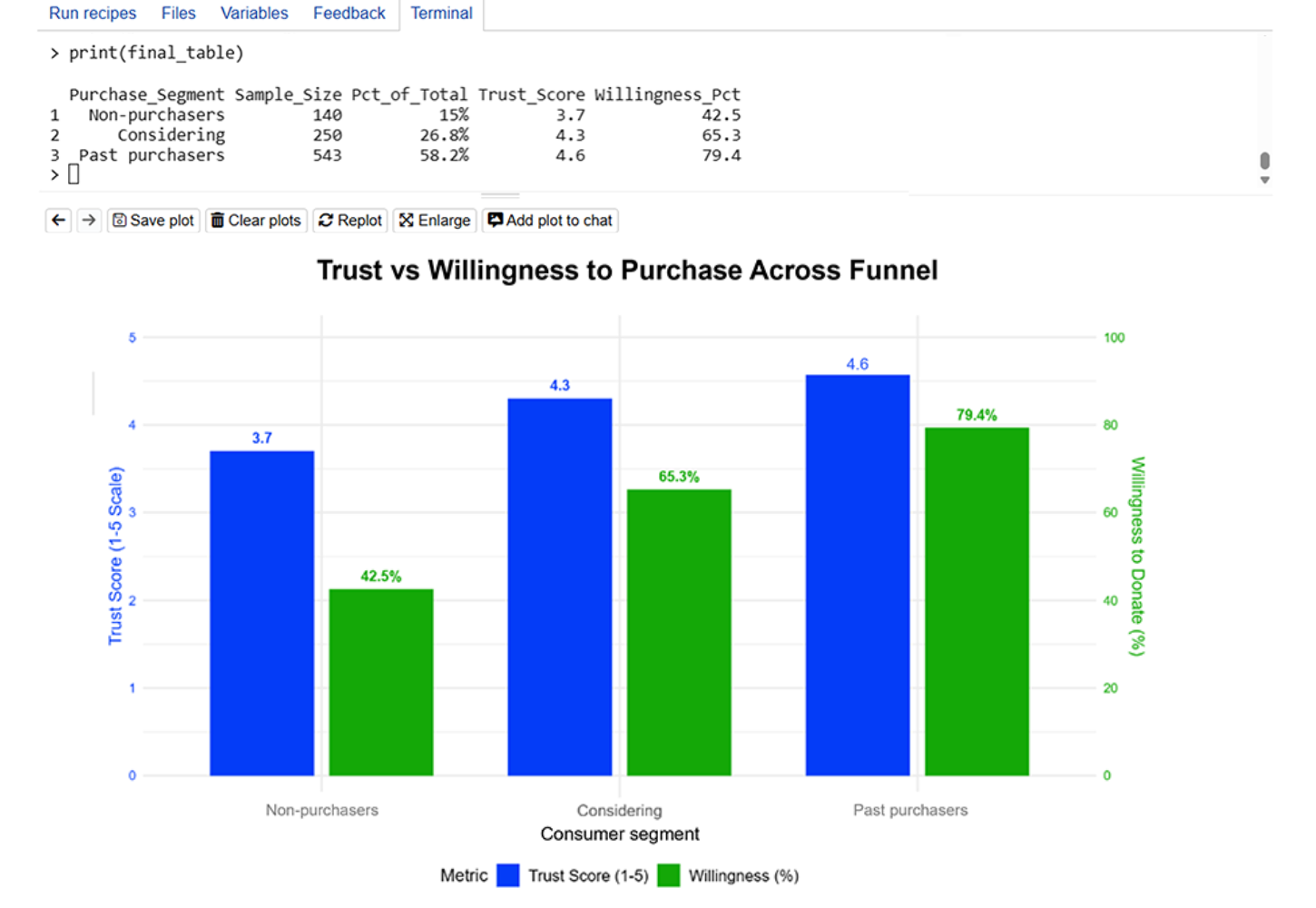
Cracking complex crosstabs using Insights Explorer
Learn how to create complex crosstabs from survey data using Insights Explorer's LLM-powered interface, with three real-world examples.
View article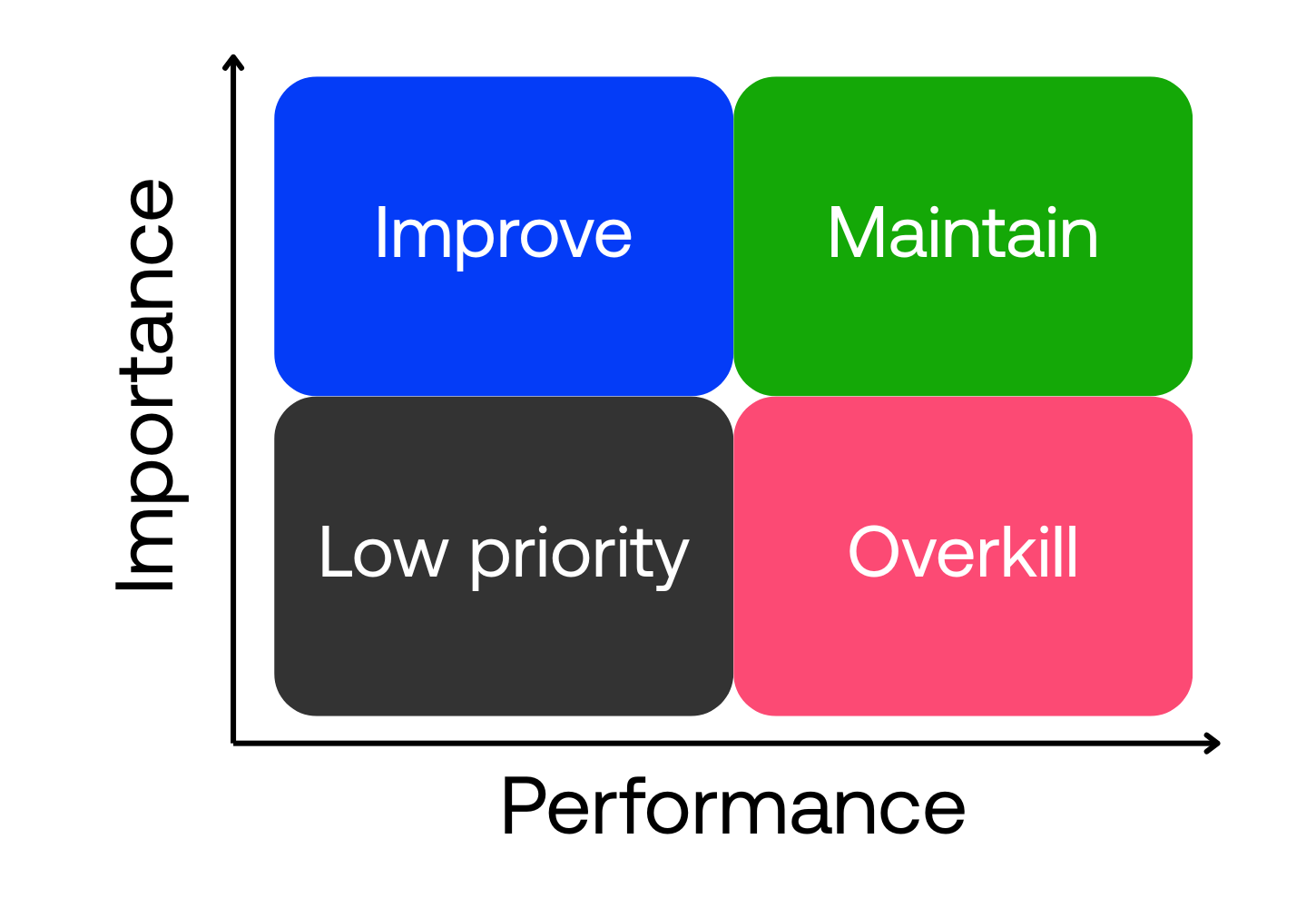
How Key Driver Analysis identifies what matters most
Key Driver Analysis reveals which factors have the strongest influence on customer satisfaction, purchase intent, or other business outcomes, helping you prioritise where to focus for the biggest improvement.
View article
Conjointly achieves ISO certification for sampling services
Conjointly is pleased to share that it has achieved ISO 20252:2019 certification for Annex A (Sampling): international recognition that our sampling services deliver real insights from real human respondents.
View article
Can consumers distinguish between real and AI images in 2025?
As AI technology advances, how confident are consumers in distinguishing between real and AI images, and does their confidence match their performance? Building on previous studies from 2023 and 2024, Conjointly examines these questions alongside evolving consumer attitudes towards AI-generated marketing content.
View article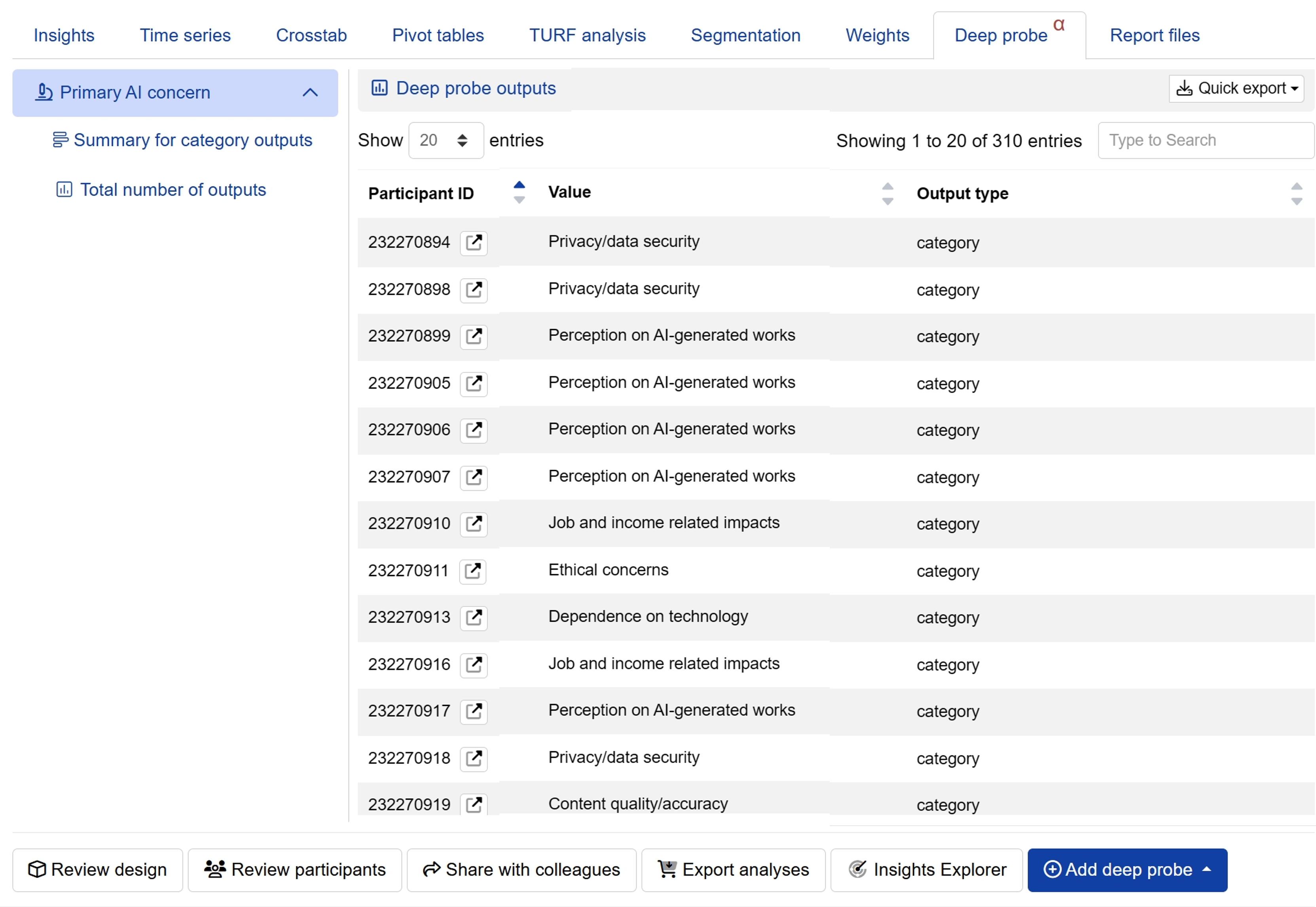
Analyse survey data automatically with Deep probe
Deep probe automatically analyses your survey data using LLM analysis or custom formulas. Simply describe what you want to learn about your respondents and receive structured outputs in minutes rather than days.
View article
Conversations, Not Checkboxes: A Smarter Way to Run Surveys
Discover how conversational surveys unlock rich, detailed responses and give you the depth you need without endless follow-up interviews.
View article
Survey scripting best practices in market research
This presentation covers survey scripting best practices, exploring both general principles and recommended approaches for specific question types in market research.
View article
AI use cases and ROI in Conjointly
Explore Conjointly's AI applications in market research, from conversational surveys to automated survey building and analysis, or work on your data in your preferred AI assistants.
View article
How implicit testing uses millisecond reaction times to measure brand associations
Discover what implicit testing is, how it uses reaction time to measure the strength of consumer associations, and its key applications in market research.
View article