

A big quarter for conjoint. New question types, smarter quotas, and many other improvements from Q2 2026.
Here’s what’s new from the past quarter on Conjointly.
At a glance
- Conjoint analysis, more advanced than ever:
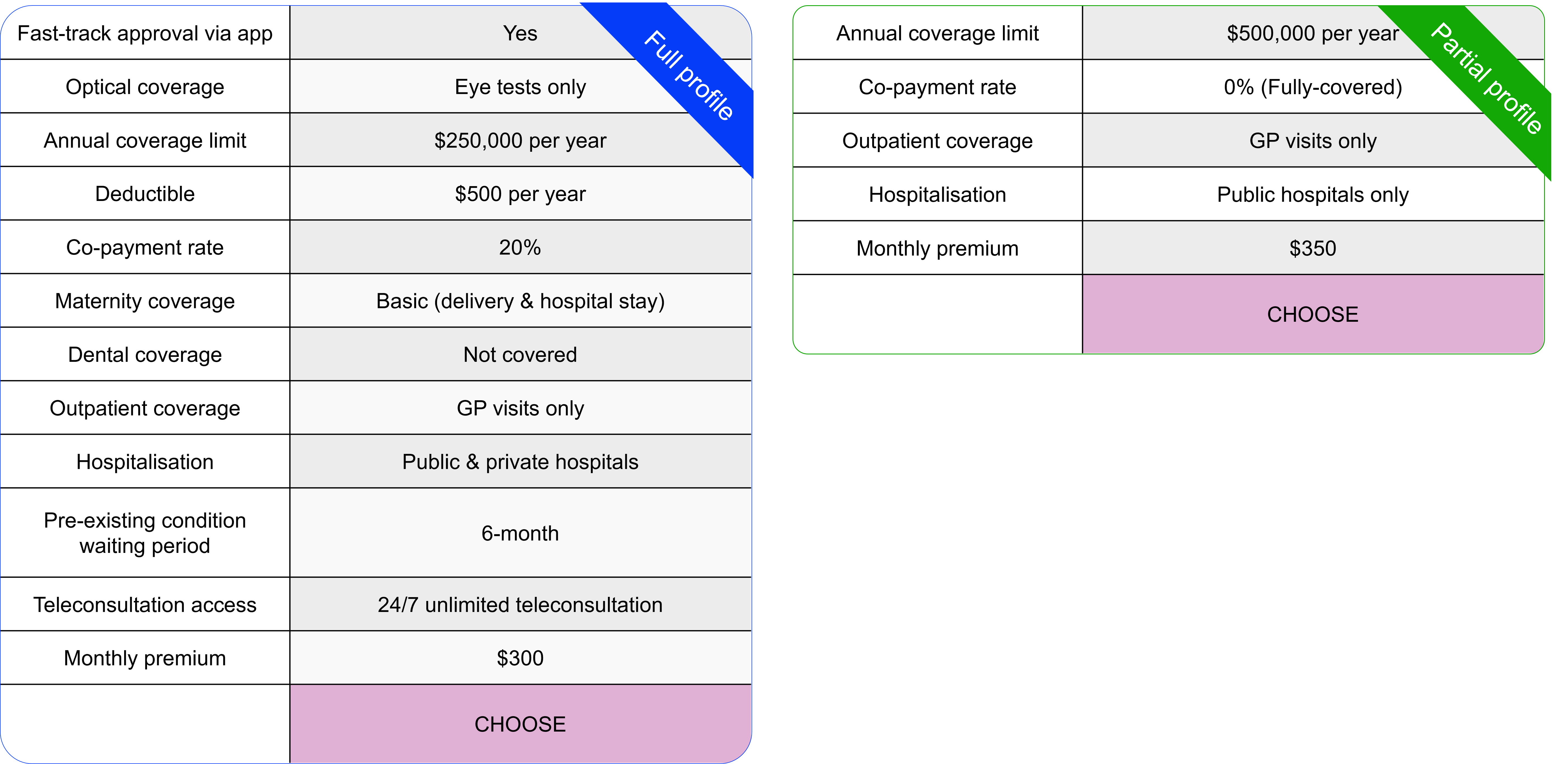
- Partial profile conjoint lets you test many attributes without overwhelming respondents
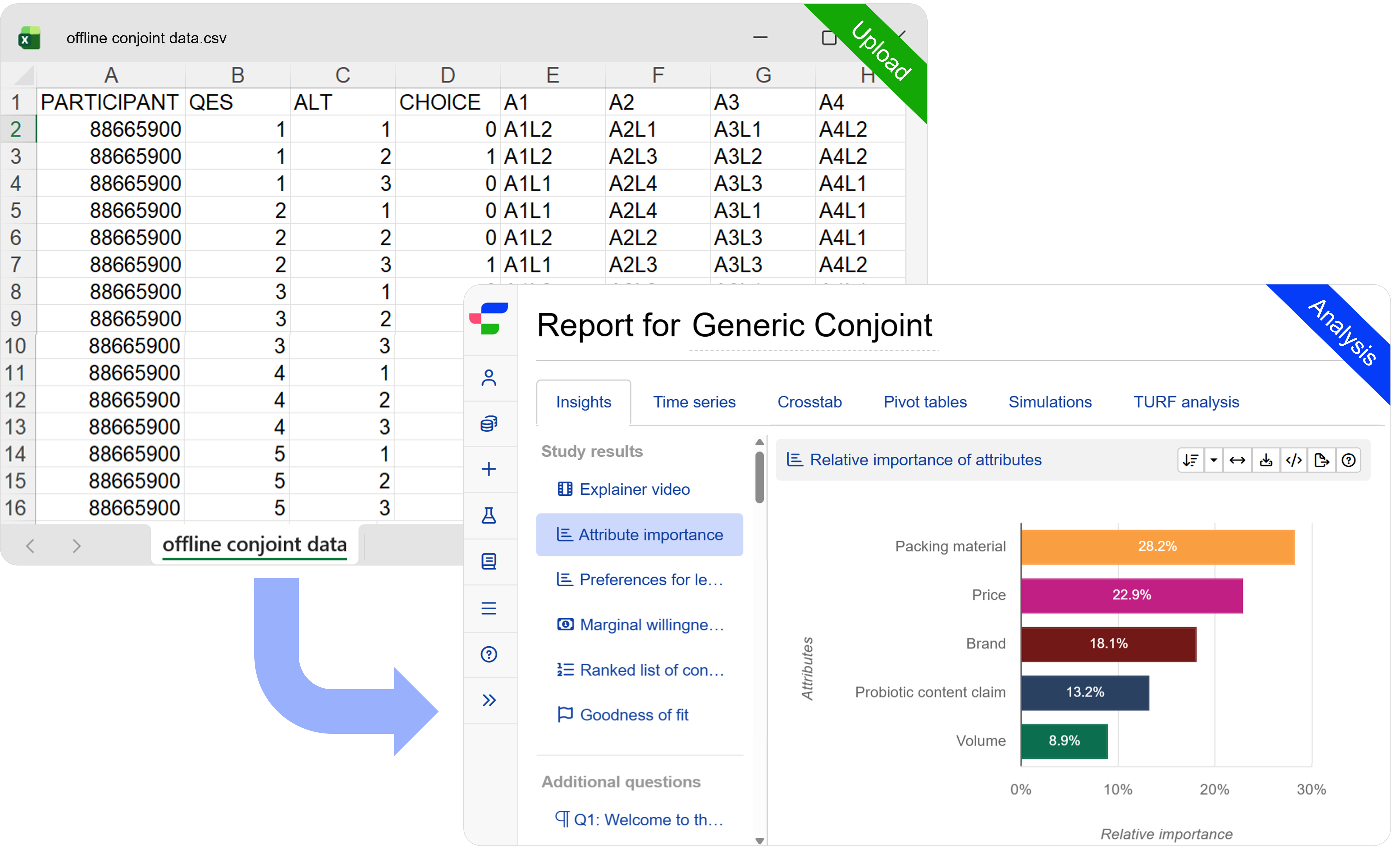
- You can upload data for conjoint and MaxDiff that was collected offline alongside your online data
- New question types:
- Closed card sorting to see how respondents group features, content, or concepts
- First-click image heatmap to capture where attention lands first
- Signature input to record respondents' consent or agreement to T&Cs
- Ranking questions now let you make respondents rank a subset of presented options
- Smarter survey design and flow:
- Quota check counts can be referenced in earlier questions, which is perfect for creating complex quotas
- Matrix grid rows and columns can be set as write-in, exclusive, or fixed
- Stimuli in monadics can now display in a new "Least filled" order
- Faster workflows:
- Create a whole survey by describing it to the AI Helper
- Enable Auto-enrol new contacts to keep launched campaigns active and automatically loop in new or re-subscribed audience members
- Order professional translation of your survey directly in the platform
- For enterprise teams:
- Statement-of-work generation is now available to everyone
- A team setting to switch off open-ended questions
- The manager role now has access to every experiment and audience across managed teams, can split and combine teams
- As always: new quality checks, a range of UI improvements, and more Brand Tracker waves
Partial profile conjoint
Studies with long attribute lists used to force a trade-off between realism and respondent fatigue. Partial profile conjoint solves it by showing each respondent a manageable subset of attributes per task, while still estimating the full set across the sample.
It suits categories where ten or more attributes matter, but no respondent should face them all at once.
Bring offline data into Conjointly
If part of your fieldwork happens offline, you can now upload offline conjoint and MaxDiff data to analyse it inside the same experiment as your online responses. One report, one set of outputs, no manual stitching.
Quota check that drives the survey flow
Quota check tracks how many respondents have met a condition as data collection runs. New this quarter: you can reference that running count in later questions.
That means you can change what a respondent sees based on how many people have already answered a certain way, which opens up super-flexible routing.
Do more with AI Helper
You can now create a full survey from the AI Helper. Describe the study you want, and it drafts the questions, ready for you to refine.
Now, the AI Helper also handles longer conversations more smoothly, so extended working sessions hold together better.
AI Helper now also reads the Conjointly knowledge base, helping you with any questions about the platform.
Questions or specific requirements? Let's book a chat.